A Personal Return to Hawkins
Sitting down with Stranger Things Season 5 Volume 1 felt less like starting a new season and more like reopening an old wound that never fully healed. As someone who has followed these kids since basement D&D sessions, I felt the weight of time in every frame.
This isn’t just another season opener trying to hook viewers with nostalgia and spectacle. It feels like a deliberate, heavy exhale before the final plunge, reminding us how much Hawkins has already lost.
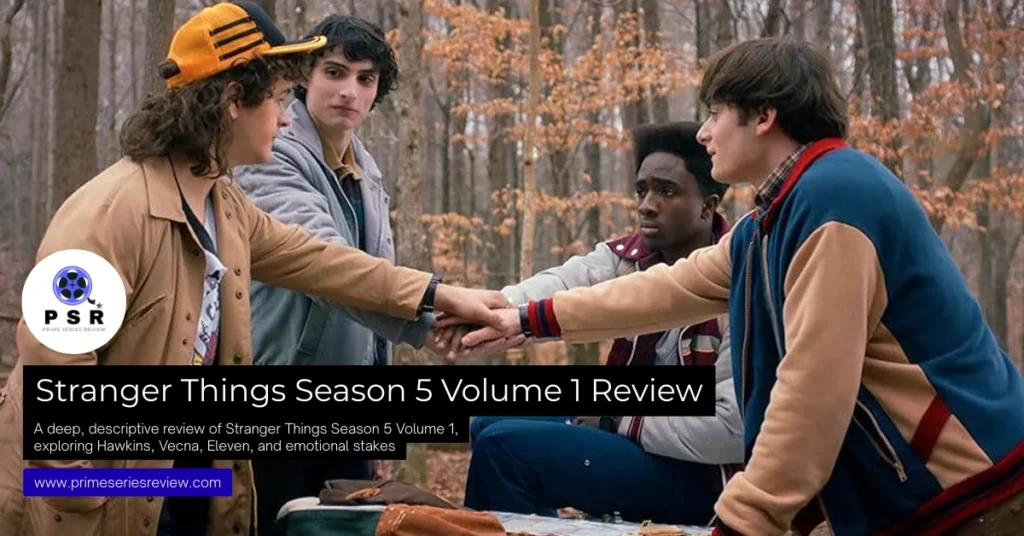
Hawkins Is No Longer a Town; It’s a Scar
The Hawkins we return to barely resembles the warm, sleepy suburb introduced in 1983. Military barricades, steel plates covering the ground, and constant surveillance turn the town into something closer to a war zone.
What struck me most is how normal life pretends to continue under these conditions. Kids still go to school, families still eat dinner, but fear hums underneath everything like static you can’t turn off.
The Long Shadow of Vecna
Vecna’s absence is more unsettling than his presence ever was. The characters don’t know if he’s dead, hiding, or evolving, and that uncertainty poisons every plan they make.
The show smartly frames Vecna as an idea as much as a villain now. Even when he’s offscreen, his influence leaks through Will’s dizziness, Holly’s imaginary friend, and Eleven’s obsessive training.
Eleven’s Training Feels Desperate, Not Heroic
Eleven’s training montage is visually impressive, but emotionally exhausting in the best way. This isn’t a triumphant superhero arc; it feels like someone trying to outrun an inevitable disaster.
Hopper timing her runs like a drill sergeant masks something darker underneath. He’s terrified of losing another daughter, and every rule he enforces comes from that fear.
Hopper and Joyce: Love Built on Fear
Hopper and Joyce continue to be one of the most grounded relationships in the series. Their arguments aren’t loud or dramatic; they’re painfully realistic.
Joyce believes Eleven is ready because she’s seen what hiding does to a child. Hopper believes protection equals survival, even if it costs trust and autonomy.
Dustin’s Anger Is the Season’s Emotional Core
Dustin’s grief over Eddie Munson is raw and unfiltered, and the show refuses to soften it. His sarcasm, defiance, and reckless courage feel like a kid who doesn’t know where to put his pain.
Watching him defend the Hellfire Club isn’t about rebellion. It’s about refusing to let his friend be remembered as a monster when he died a hero.
The Radio Station: Resistance Through Music
The radio station is one of the smartest narrative additions this season. It feels scrappy, intimate, and deeply Hawkins in spirit.
Robin using music as coded communication is clever and charming, but it also reinforces how fragile their entire operation is. One power outage, one wrong frequency, and everything collapses.
Steve and Jonathan: Old Tensions, New Stakes
The Steve and Jonathan rivalry over Nancy briefly feels tired, but it serves a purpose. It shows how old emotional habits resurface under stress, even when the world is ending.
Their radio tower race isn’t really about Nancy. It’s about two men trying to prove they still matter in a story that’s growing bigger than them.
Will Byers Is No Longer Just a Victim
Noah Schnapp’s performance quietly signals a major shift for Will. He’s more assertive, more observant, and deeply aware that something inside him never fully let go of Vecna.
His connection doesn’t feel like possession anymore. It feels like an unresolved bond that might tip the balance of power in unexpected ways.
Robin as Confidence and Compass
Robin continues to be one of the show’s brightest characters, not because she’s funny, but because she’s emotionally honest. Pairing her with Will is a brilliant choice.
She becomes someone he can trust without fear, especially as he navigates feelings he doesn’t yet have language for. Their scenes feel gentle, human, and necessary.
Max’s Absence Is Loud
Max being in a coma casts a shadow over every character, especially Lucas. His hospital visits are quiet, heartbreaking reminders that survival doesn’t always mean living.
The promise that Max’s mind is still active adds tension rather than comfort. It suggests that waking up might be another battle entirely.
Holly Wheeler and the Horror of Innocence
Holly becoming a focal point is one of the season’s most unsettling choices. Her “imaginary friend” taps directly into the show’s earliest horror instincts.
There’s something deeply disturbing about evil approaching not through trauma, but through trust and imagination. It’s classic Stranger Things, refined and sharpened.
Chapter One: A Necessary Stumble
The first episode is undeniably clunky, weighed down by exposition and setup. It feels like the engine struggling to turn over after years of silence.
Still, I appreciated its honesty. The Duffers don’t pretend the reset is seamless, and they push through the awkwardness instead of hiding it behind spectacle.
Chapter Two: Horror Finds Its Voice Again
“The Vanishing of Holly Wheeler” is where the season truly wakes up. The demogorgon attack is terrifying, intimate, and uncomfortably domestic.
It reminds us why Stranger Things works best when horror invades familiar spaces. Monsters are scariest when they enter your living room.
Chapter Three: Scale Without Losing Soul
Frank Darabont’s direction brings weight and texture to the Upside Down sequences. The action feels grounded, even when it’s chaotic.
Hopper’s missions carry real danger, and the show never lets us forget how alone he is once the radios go silent.
Chapter Four: A Finale That Earns Its Chaos
“Sorcerer” is bold, violent, and emotionally exhausting. The cross-cutting between the Upside Down jailbreak and real-world chaos is some of the best editing the series has ever delivered.
This episode doesn’t just raise stakes; it redraws the battlefield entirely. Vecna’s plan becomes clearer, and it’s far more terrifying than expected.
Violence That Reflects Maturity
Season 5 doesn’t shy away from graphic violence, and it shouldn’t. The characters are older, and the world they’re fighting has grown crueler.
Nothing feels gratuitous here. Every brutal moment reinforces that childhood is officially over in Hawkins.
Thematic Payoffs Years in the Making
The callbacks to earlier seasons feel purposeful rather than nostalgic. They reframe past choices and hint at long-awaited corrections.
There’s a sense that the Duffers are aware of past criticisms and are quietly addressing them through story, not apology.
The Weight of a Final Beginning
What impressed me most is how untired this season feels. After nine years, Stranger Things still believes in its story.
It doesn’t rush toward an ending. Instead, it plants its feet, looks backward, and then dares to move forward one last time.
Final Thoughts: A Worthy Start to the End
Stranger Things Season 5 Volume 1 isn’t perfect, but it’s confident, emotionally rich, and deeply intentional. It understands what made this show matter in the first place.
As someone who grew up with these characters, I didn’t just watch these episodes. I felt them, and that’s why the wait suddenly feels worth it.